
Share Cedric Allen Mullins's obituary with others.
Invite friends and family to read the obituary and add memories.
Stay updated
We'll notify you when service details or new memories are added.
You're now following this obituary
We'll email you when there are updates.
Select your format and elements to print

IN LOVING MEMORY OF Cedric Allen Mullins
Cedric Allen
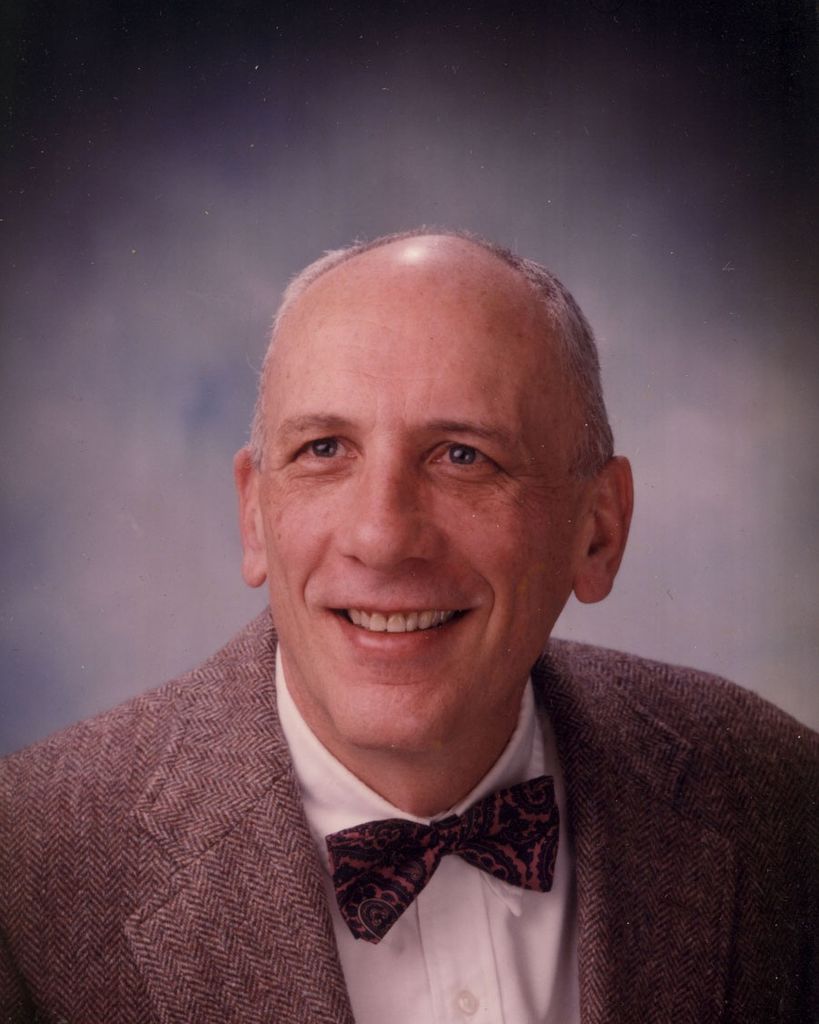
Mullins
d. Sep 9, 2026
Allentown PA
Cedric Allen Mullins' Obituary
Cecil Allen Mullins, 87
Architect, Historic Preservationist, Teacher
Cecil Allen Mullins died September 9 at Arden Courts, Allentown, Pennsylvania. He was 87.
One afternoon in July 1967, at the height of the Summer of Love, Allen Mullins drove a Volkswagen Beetle to the last Finnish checkpoint before the Soviet border. A guard took his passport and that of his passenger, Carl Teich. He carefully scrutinized the documents, which identified the men as Americans, both 28. “Why do you want to go to the Soviet Union?” he finally asked. “Don’t you know how bad it is there?”
The trip was part of a grand adventure the two had dreamed up: buy a car straight out of the factory in Wolfsburg, then drive across Scandinavia into the USSR, all the way to Leningrad. It was an unusual choice, not without risk, with America and Russia locked in the Cold War. But Carl was itching to practice the Russian he’d studied at MIT, and Allen wanted to explore Catherine the Great’s vast art collection at the Hermitage Museum.
The pair were an odd couple of sorts: Allen, a tall farm boy from Colorado; Carl, a curly-haired Jewish kid from New York City. But they shared a penchant for zigging when the crowd zagged. While the Beatles and Bob Dylan were dominating U.S. airwaves, they first bonded over Arthur Fiedler and the Boston Pops.
Such independent thinking was rooted in their professional lives as well. Allen was an architect, working for the pioneering firm The Architects Collaborative (TAC), then challenging many of the principles of modern design. Carl was a physicist and engineer, researching new ways light could be manipulated for use in technology. “In different ways, we were both used to challenging conventions, of all sorts,” Carl says.
There was plenty to challenge then. The Vietnam War and the Civil Rights Movement were nearing their apexes, and feminism and the sexual revolution were gathering momentum. “It was a time when just so much seemed open to question,” Carl remembers.
So why not take a peek inside the Iron Curtain?
They told the border guard that they’d heard the stories, but they wanted to see the USSR for themselves. “You should reconsider,” he said, explaining they’d be the last car allowed to pass that day. “You can’t return after I close the gate.”
Leningrad was a long way from the little town of Salida, Colorado, where Cecil Allen Mullins was born to Cecil and Donnis Mullins on June 7, 1939. The family, which included Allen’s two-year-old sister, Dorene, lived 30 miles down the Arkansas River Valley in Cotopaxi, a speck of a mountain town with barely 100 people and no hospital. Cecil Mullins was the principal of the local school, which gathered children from neighboring farms and ranches. He moved on to bigger schools in neighboring towns, and the family eventually settled in Del Norte.
It was there, in November 1944, that Donnis gave birth to a son, Donald, and died of complications a day later. Her death devastated the family, and the baby was sent to live with relatives in Denver. Two years later, Noan Anderson, a home economics teacher, came into their lives. Dorene and Allen convened a meeting to discuss their new stepmother in their secret spot behind Donnis’s piano. “We decided we liked her,” Dorene remembered years later. “She helped bring us all back together.”
A decade later, the city of Pueblo hired Cecil as superintendent of schools, and he bought a small farm on the city’s outskirts. Every day there were chores - a cow to milk, pigs to slop, weeds to hoe, gopher holes to fill, corn to harvest. “It was hard work,” remembers Donald. “But we certainly learned a lot.”
Mainly, Allen learned that he did not want to become a farmer. He played tuba, admired the sleek Chevys and Fords that were being modified into hot rods, and took an interest in art of all kinds. A neighbor in Del Norte who was a painter had recognized this and given him some informal lessons. After graduation, Allen took a while to figure out his path but soon decided he wanted to study architecture. His father pushed him to think more pragmatically. In his experience during the Depression, architects went hungry.
But Cecil came around, and Allen entered the University of Arkansas, where he studied under Fay Jones, a former pupil of Frank Lloyd Wright. While still a student, he spent a year in Los Angeles working for Edward Durell Stone, who helped design Radio City Music Hall and the Museum of Modern Art. After graduation, he moved to Boston and joined TAC, cofounded by Walter Gropius, the founder of the German Bauhaus. Studying and working in these very different landscapes, under architects each pushing the boundaries of modern architecture in his own way, would shape Allen’s own philosophy.
An architect, he believed, had to consider more than just how a structure occupied space. He had to consider the way its textures and colors, patterns and shapes conversed with their surroundings. Was there music in its lines? Was it in harmony with the music of other structures? Was it in harmony with nature? And this wasn’t just important for skyscrapers and trophy residences. It was important for bus depots and modest apartment buildings. Architecture was a force in human life whether we recognized it or not, and the architect had the ability to lighten the human experience, to make life easier, even hopeful.
“The building, the neighborhood, the community, the region,” Allen later wrote, “one does not exist out of context with the others. It’s the architect’s obligation to remain aware of this fact.”
Soon after their Russian adventure, Allen suggested to Carl that they buy a building in Boston’s South End. It was a rough neighborhood with wonderful architecture. They paid $19,000 for a decrepit rooming house, and Allen drafted the plans to convert it into a duplex. The men did the renovation themselves, fitting in the work around their day jobs.
As their careers took them to other cities—Denver and New York—the men found projects there. Allen was especially drawn to neighborhoods that had been written off as blighted. “He’d always say, I’m telling you, this is going to shape up really nicely,” Carl says. “He could see through flaws and dirt and grime and decay. He saw what it could be, not what it was.”
In the mid-1970s, Allen found a rundown building in Greenwich Village. The property was a jumble of two crumbling Greek revival row houses dating to 1841. He designed six apartments, including one that occupied the entire top floor, which he and Carl would share, along with a ground floor space he’d use for his architecture practice. The catch was it needed everything—from updated plumbing and wiring to new windows and refurbished brick.
It was a rough moment to invest in New York, with the city facing bankruptcy and spiraling crime. But with Carl on the faculty at Columbia and Allen having recently opened his own practice, the two men felt rooted in New York. And for all the city’s problems, the Village remained a vibrant enclave filled with artists and intellectuals, actors and musicians.
With the help of Bill Nowak, a talented carpenter, Allen renovated the units one by one. Meanwhile, he and Carl lived in the basement apartment, which doubled as Allen’s office. It took two years and brought several headaches and near disasters—building inspectors asking for bribes, an electrician almost burning the place down—but Allen’s calm always prevailed. The finished product reflected his architectural philosophy: modern living spaces behind the restored facade of a 19th-century structure. The Greenwich Village Association named it the best building renovation of 1979.
By the late 1980s, Allen wanted a quieter life and moved to Bear Creek Village, a former logging community in Pennsylvania’s Poconos. He transformed a rustic lumberjack’s cabin into a spacious refuge. At the suggestion of Brian Overman, a fellow architect, he began teaching classes at Luzerne County Community College. He also chaired the village’s planning commission and helped found its historical society.
Eventually, he relocated his practice to Wilkes-Barre and hired a young architect named Rick Malcolm. The firm took on a range of projects—a children’s health facility, a Jewish community center, outbuildings for a horse track and a cemetery, and a drive-through coffee shop shaped like a cup and saucer.
“He was always taking me to see great buildings and explaining why their designs worked,” said Rick, who now leads the firm. “I learned so much from him.”
Through the years, Allen and Carl remained close. In 2016, nearly half a century after their first adventure, the two friends again traveled across Northern Europe and returned to St. Petersburg, the former Leningrad.
But for Carl, the memories of that afternoon in 1967 on the Finnish border still burn brightly. He remembers a sudden sense of foreboding as they left the worried guard and drove into the dark forests of the Soviet Union. Maybe this wasn’t such a good idea after all?
Allen remained his usual steady self. “Don’t worry,” he said. “You’ll see. We’ll be fine.”
He was preceded in death by his mother, Donnis Coy Mullins; his father Cecil Mullins; his stepmother, Noan Anderson Mullins; his older sister Dorene Donnis Gwin; and his sister-in-law Kathleen June Mullins. He is survived by his brother Donald Mullins; niece Heather Mullins Crislip (Andrew); nephews Peter Gwin (Cathy), Geoffrey Gwin (Kate), Timothy Gwin (Rosie), Aaron Mullins (Kara); and 12 great nieces and nephews.
A memorial celebration of Allen’s life will be held on Saturday, November 7th at the First Presbyterian Church of Wilkes-Barre, 97 S. Franklin St., beginning at 10:00 am with a visitation followed by an 11:00 am worship service and a reception.
In lieu of flowers, the family suggests donations be made to the Northeastern Pennsylvania Chapter of the American Institute of Architects Scholarship Endowment https://luzfdn.fcsuite.com/erp/donate/create/fund?funit_id=1299
or a charity of your choice.
Cedric Allen Mullins' Guestbook
Visits: 3
This site is protected by reCAPTCHA and the
Google Privacy Policy and Terms of Service apply.
Service map data © OpenStreetMap contributors